
Gliza Quirimit, Love and Home, 2025. Sing Lit Station.
IV. Migrant dreaming: The future of migrant poetry (2022 and beyond)
Written by Ada Cheong
Dated 18 Dec 2025
2022 – Migrant Writers of Singapore and Sing Lit Station host Story Telling Festival at Bishan Public Library
2022 – Zakir is repatriated for writing “Please do not call us your brothers”
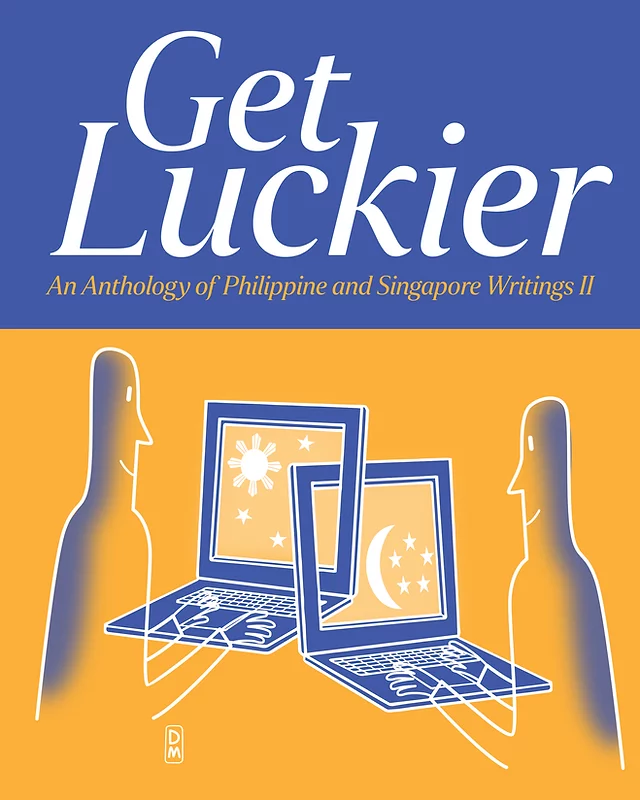
2022 – Get Luckier: An Anthology of Philippine and Singapore Writings II published
2023 – The last iteration of MWPC
2022 – A Journey by Lorry exhibition is held at Projector X: Riverside
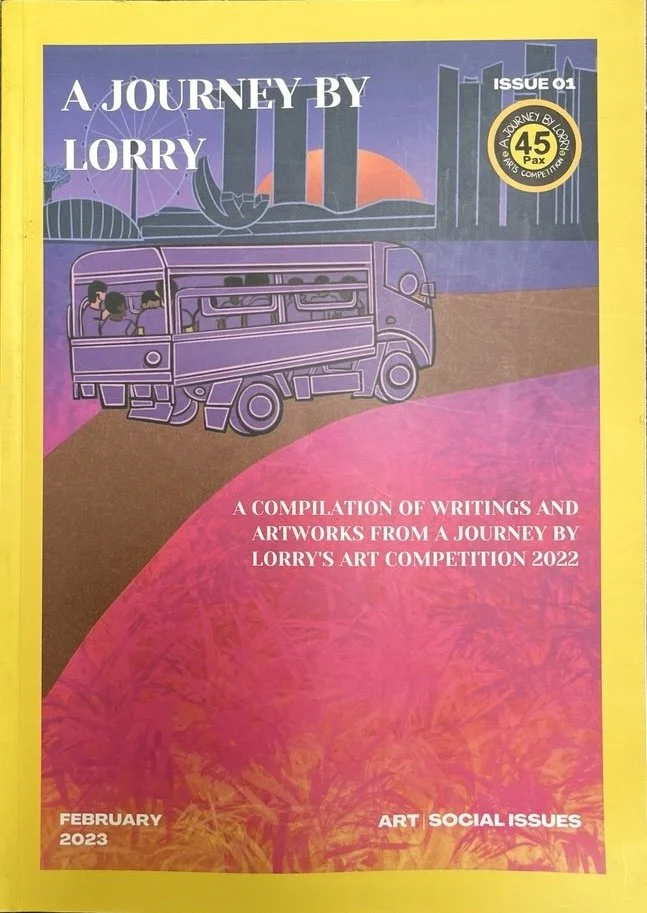
2023 – A Journey by Lorry collection is published
2023 – Language of My Heart, poetry collection by Janelyn Dupingay
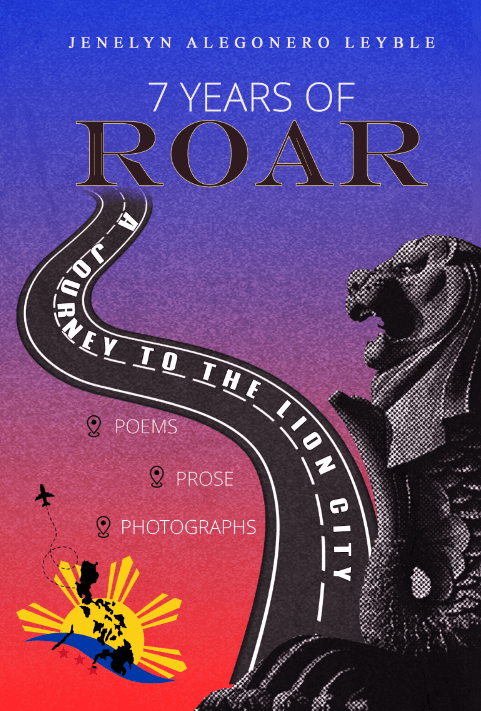
2024 – 7 Years of Roar, prose, poetry, and photo collection by Jenelyn Leyble
2024 – Sharif is sent back to Bangladesh
2025 – Rubel’s battle against colorectal cancer ends and he passes away
2025 – The Projector closes
2026 – Here & Elsewhere art and poetry exhibition by Migrant Writers of Singapore

In recent years, migrant poetry in Singapore has become much less controversial as the initial novelty faded and the Bangladeshi writers who drove the earlier literary-advocacy activities are gone. While fewer “migrant writing” events make the headlines of mainstream news, migrant writers continue to build and maintain spaces for literary expression.
While managing the dormitory crises of Covid-19, migrant advocates found firm allies and friends in local literary and civil society circles. Zakir and Sharif, whose works moved between art and advocacy, were part of a wider fraternity of mainly Bangladeshi male writers and artists. Figures such as Ripon Chowdhury, A.K. Zilani, and Fazley Elahi Rubel were also community leaders and artists who had previously created the Migrant Library in 2017. Rubel launched the annual Migrant Cultural Show in 2018, while Ripon started the Migrant Workers Singapore group in 2019, originally meant to be another platform to showcase migrant talent and culture. The ties between these migrant advocates and local civil society figures and writers deepened over Covid. Theophilus Kwek, for example, was a writer that Sharif reached out to throughout the circuit breaker period.
These ties eventually birthed the Journey by Lorry (JBL) project, which reflected rich collaboration between migrant poet-advocates, civil society groups, academics, local writers, and activists. When two major lorry accidents occurred again in April 2021, it became painfully clear that stopgap regulations introduced by the government in 2009 were insufficient to ensure safety in a vehicle designed for cargo. This sparked a renewed wave of advocacy by migrant worker figures and Singaporeans, including multiple members of parliament, and civil society groups such as Workers Make Possible (WMP) and the online Humans Not Cargo project (HOME, Risky 16). Through writing, migrant poets formed a voice around which advocates (both migrant and local) could rally and organise, making a fairer and more dignified system imaginable.
In 2022 Sharif, Ripon, and local educator and activist Kethlyn Gayatiri organised a writing competition that culminated in an exhibition that year, and a magazine featuring the literary and visual works in 2023. The project was crowdfunded with support from CYS Global Remit, and coordinated through a wide network of literary, academic, and activist figures. It gathered over a hundred entries in the form of short stories and poems, mostly from male migrant workers (Ibrahim), and thirty entries were selected for the exhibition and print collection. These shortlisted entries were originally written in English as well as Tagalog and Bengali, and translated into English by a team of volunteer translators.
Following the competition, an exhibition was held at Projector X: Riverside to showcase the literary and visual submissions. The event was warmly embraced by local figures such as NMP Anthea Ong, and it was moderated by Shivaji Das and Theophilus Kwek. Amongst its panelists were Singaporean writers such as Ng Yi-Sheng, Crispin Rodrigues, and Jennifer Anne Champion; academics including Amali Ibrahim (judge) and Luka Lei Zhang (panelist); and NGO representatives and civil society figures like Jevon Ng, Jaya Anil Kumar, Stephanie Chok, Suraendher Kumarr, and Amanda Low.
The exhibition was a huge success, with many journalists and Singaporeans in the room, securing it a full page feature on the Straits Times (Neo 2022). It was, however, more than a PR exercise; unlike earlier poetry events that had strong elements of performativity and consumption of migrant poetry, the JBL exhibition created a more conversational space that centered around dialogue and solidarity. As Ibrahim points out, “the exhibition was designed to be interactive so as to overcome the passive Singaporean gaze”, and invited local artists and photographers to submit visual works inspired by the poems.
In other words, the dreamwork of migrant poetry here lies not just in the words of writers, but also in the actions inspired by their words. Like Sharif’s writing, the pieces within this collection bring out the textures of the migrant precariat’s lived reality, giving voice to experiences that are otherwise forgotten or invisibilised. Interestingly, they shed the irreal and sensuous qualities that earlier texts displayed, presenting a certain level of caution in their creativity.
Certain themes thread the different pieces of the collection. Many writers recount their first day in Singapore and the moment of realisation that lorry transport is the norm for workers like themselves. The Lorry Encounter is rendered in the top three winning pieces by Mohammad Hasmot Ali (Beng.), Md Mizanur (Beng.), and Saifur Rahman Anay (Beng.), and echoed across the writings of Mohammad Sharif Rana and Monirul Islam. These writers describe their arrival in Changi airport and the first time they are told to get into the lorry, and articulate the “feeling of helplessness floa[t] in the eyes of all the newcomers in the same way” (Md Mizanur). While none of them resist the instructions given by the employers who pick them up from the airport, their surprise and unease unsettles the way lorries have been normalised as an acceptable and inevitable part of migrant life by the state and by employers alike. The lorry becomes the first sign of the many indignities to come in their lives as a migrant precariat in Singapore.
In doing so, these writers articulate an experience that most Singaporeans are not privy to, and do the affective work of describing the experiences and emotions surrounding lorry rides. The dynamics of gazing also surfaces in multiple poems, as writers describe the shame of looking out of their lorries as well as being seen in one. Hasan Nazmon’s piece, translated from Bengali, begins with this call to see the world through his eyes with the gentle question, “Do you know what I am looking at right now?” before describing his view of the beautiful civilisation built by migrant hands, “from a car that has a roof but no wall”. Mohammad Arman Hossan (Beng.) “instantly regret[s]” “seeing latest models of expensive cars”; Sumun Biswas (Beng.) likewise describes the embarrassment of looking at the “expensive cars on both sides of the road” before “put[ting] our heads down in shame”, while Shamin Mia (Beng.) would prefer not to look at all, glad that the “lorry / Protects [them] from the staring crowd”. The lorry’s railings become a border between the city and the migrant precariat, and gazing across this border makes these writers acutely aware of their lack of dignity as “dumb migrant animals” (Hasan).
The lorry emerges as a carrier of migrant dreams throughout these writings, in multiple ways. Woven into the fabric of their working lives, it is not always talked about with resentment and shame; at times, a certain tenderness or affection towards the lorry emerges in these writings. It is the very vehicle that brings workers to their jobs and allows them to earn a living for their family. For Zahid (Beng.), the “Lorry is like a dream”; being able to board the lorry to work is when his “dream had finally come true” of supporting his family. Ali Muzzaman (Beng.) likewise describes the lorry extremely positively as a “guiding light”, “life partner”, “refuge”, and “light of happiness in a house of sorrow” because it allows them to “put food on the table” for their families.
In a more literal sense, it carries workers who sleep and dream on the way to work because they board the lorry before the sun rises. Md Ashraful describes:
The sun rises in the lorry
The sun sets in the lorry,
We dream sitting in the lorry
From dawn to dusk.
It is the space where “Sleep… hurts the eyes” (Md Saidul Islam, Beng.), and where workers “get lost in the kingdom of sleep” (Aminul, Beng.) and “travel continuously before the first sunlight caresses the earth” (Suresh Ranjendiran, Eng.).
Tied to the rhythms of labour that shape their daily routines, the lorry is both a source of pain and comfort. Saiful Islam’s piece, translated from Bengali, describes the inefficiencies of how a single lorry makes round trips to bring everyone in the company between the worksite and dormitory, the two-hour-long waits for the next lorry ride, and the fight to secure a place on it. On the vehicle, rubbish bags become a luxury when it rains (Sabuj Miah, Beng.), buttocks hurt (Shy Lhen Esposo, Eng.), and workers’ feet tingle from falling asleep as they are suffocated by the stench of sweaty bodies and dirty socks (Islam Mohammad Rabiul, Beng.).
Yet, because of how much a worker’s life revolves around the lorry, it also becomes a welcome routine for some. At the end of a long day, it is where one’s “tired body is caressed by nature’s cool air” (Shakawar Hossain Rabbi, Beng.), and is an “everyday companion” (Md Shaiful, Beng.). Md Arafat writes tenderly in Bengali about the vehicle, describing it as a “selfless” lorry and “friend” as it brings solidarity and freedom to the worker. Arafat’s long years spent on the lorry makes it such that:
Nowadays even the dust on the road of the lorry feels like my own. I love the smell of its black smoke, its fierce speed, the sound of its horn—all of this reminds me that I’m not alone.
Beyond the workday, it affords the worker freedom to travel the city, even bringing their dates on a ride such as the one described by Rosita Madrid Sanchez (Eng.).
For reasons we shall see later, there is a bigger degree of caution in the JBL collection than in Zakir’s and Sharif’s own writings. Many of the pieces are expository rather than sensuous and irrealist, with many of them beginning with self-introductions and greetings (e.g. Zahidul, Parvez Madbar, Mohammad Gias Uddin and Sharif Hossain) or explanations defining the lorry (e.g. Nurul Alam, Shakawar Hossain Rabbi, and Islamd Moahammad Rabiul). The works present personal recounts of the lorry experience that draw on first-person experiences, and opinions are presented in an extremely formal and polite tone. While they likewise directly address the government, writers such as Parvez Madbar (Beng.), Md Sehab Uddin (Beng.), Mohammad Gias Uddin (Beng.), Homaion Kabir (Beng.), Aminul (Beng.), and Sharif Hossain (Beng.) end their pieces with entreaties that are phrased highly diplomatically. Sehab and Gias suggest what they think the government should do, and Sehab, Aminul, and Sharif Hossain couch their suggestions as humble requests to the government. Like Zakir and Sharif, these writers identify the systemic changes that are necessary for a fairer and more dignified migrant labour system in Singapore, writing with a vision towards a better world.

JBL was significant, marking the start of much stronger migrant-local partnership in civil society. The collection itself was quoted in a 2025 report about lorry rides titled Risky Rides by the NGO HOME, as evidence, articulated in the words of workers themselves, of the negative emotional impact of lorries (39). Following the project, Ripon’s group Migrant Workers Singapore moved beyond just the celebration of culture to offer helpdesk services to workers with employment-related issues. Workers Make Possible (WMP), along with a cluster of other civil society groups, also became public allies of Migrant Worker Singapore. The joint advocacy they embarked on was presented on Instagram posts about the lorry issue from 2023 onwards, and later the End Lorry Rides, Save Workers’ Lives campaign. In subsequent years, WMP included Migrant Workers Singapore in their activities, including the Labour Day Rally and People’s Manifesto, as well as other collaborations by the SG Climate Rally and Alliance Against the Death Penalty. In the last two years, WMP has also used their platform to blow the whistle on cases that the Migrant Workers Singapore helpdesk sees and assists with.
Meanwhile, migrant poetry is more or less left out of the continued activism by Migrant Workers Singapore and WMP. Figures like Ripon and Omar have adopted lower profiles; whether out of fatigue, caution, or the realities of transient work, their voices now surface mostly in smaller gatherings or online posts that circulate within migrant networks rather than mainstream platforms. The repatriation of key figures such as Zakir and Sharif has also left a palpable void. Zakir’s work pass was not renewed in 2022, when he faced state retaliation against his outspoken Covid-19 advocacy. The Ministry of Manpower accused him of posting “misleading and provocative” comments in his “Please do not call us your brothers” poem the year before. The price of speaking up is too high for a migrant worker to bear, and many became cautious of the consequences of publicly voicing their political opinions. Likewise, Sharif’s dismissal and subsequent repatriation in 2024 saw the loss of a community organiser and outspoken writer on the scene. He was repatriated despite being a confirmed victim of loan-shark harassment, drawing strong protest from civil society and groups who called for transparency and due process. Lastly, the recent death of Rubel in 2025 was mourned across migrant and activist communities alike, underscoring how deeply entwined the literary and advocacy spheres had become. With the loss of these migrant literary figures, as well as the closure in 2025 of The Projector, a key community space for the migrant arts scene, the work of advocacy continues largely independently of the migrant poetry scene.
In this time, the ties between migrant poets and the local literary scene continue to flourish in different ways. In 2025, the Poems On The MRT project featured the writing of migrant poets such as MR Mizan and Nilakannan. Their verses were included in the curated collection of “Singapore poetry” displayed in trains on the East-West, North-South, and Circle Lines (NAC 2025). The 2025 Singapore Writer’s Festival also saw five pairs of local and migrant writers presenting at the “A Land Imagined” event. Likewise, this year’s Poetry Festival Singapore also held a session titled “Migrant Verses”, where migrant writers shared their works alongside local ones.
Elsewhere, poetry continues to function as a vital source of leisure and community for the migrant precariat. In a city that offers few genuine third spaces, especially for migrant workers, Migrant Writers of Singapore remains an important community group, supported by Sing Lit Station. Miranda Cardenas, the Sing Lit Station associate and organiser who works with Migrant Writers of Singapore, shared that from its initial founding in 2016 and flurry of online activity during Covid, the group has become more established since 2022 through funding from the Majurity Trust. It now consists of mostly women writers from the Philippines, and some from Indonesia and Myanmar.
The first Majurity Trust grant saw the establishment of the group’s website as well as the growth of more regular writing workshops, small competitions, book distribution drives, and the Carnival of Poetry, their flagship monthly poetry readings. Each reading features around seven poets, a mix of migrant and local writers who respond to a monthly theme curated by the organisers, and a Q&A panel discussion at the end. Poems are read in a mix of languages; where there are no English translations by poets or audience members, the performer prefaces their piece with a brief explanation. The work, Cardenas shares, is typical of migrant poetry more generally, touching on their lives here, their hardships and dreams, as well as the people they miss back home. Poetry becomes a form of self-care, and mental health features consistently in their works as writers find Migrant Writers of Singapore a space where they can find peace or build resilience. The second grant, awarded at the end of 2024, enabled the group to continue these activities and hold more arts workshops, as well as a large-scale exhibition titled Here & Elsewhere at the Visual Arts Centre in Dhoby Ghaut, in January 2026.
Distinct from the previous two phases, in which the optics and politics of migrant poetry were priorities for its writers, the group does not do much outspoken advocacy. The activities of Migrant Writers of Singapore are very much focussed on community building, occasionally engaging grassroots and civil society groups in this capacity. These include the Bangladeshi worker community In This Together, as well as ground-up initiative SayurStory and NGO HOME. In November 2025, these groups collaborated to hold a workshop titled “From Pasar To Table”, exploring food insecurity for migrant domestic workers. Any advocacy that emerges from these events, however, is much ‘softer’, and usually fronted by NGOs which have a higher risk appetite than individual migrant writers.
Indeed, rather than seeking to spotlight certain advocacy issues or producing high-profile migrant writers, the group has instead evolved better ways of doing the work of community organisation. As Cardenas shares, the Majurity Trust grant is justified by an expected level of migrant work created and exhibited, audience (both local and migrant) that the group reaches, and migrant volunteers trained with the potential of becoming independent art organisers in their own right. While outreach is a factor the group considers, their writers are not particularly concerned with aggressively recruiting more volunteers or publicising individual writers, investing their time and energy instead into the longevity of this space. Given the transient nature of migrant labour in Singapore, and the fact that domestic workers only have one day off a month on which they cannot be pressured to work in exchange for extra wages, the work of arts organisation is not suitable for many migrant writers. As such, the core organising committee has consisted of mostly the same women over the years. While Filipina writers Janelyn Dupingay and Jenelyn Leyble from the group have independently published collections, Migrant Writers of Singapore do not, as Cardenas says, see publishing poetry collections as their main goal. Publishing is extremely resource-intensive, and these writers value more highly the opportunity to socialise and express themselves through writing and performing. In organising regular readings and competitions, they have begun to formalise systems and guidelines around volunteer conduct, the use of generative AI, and collective decision-making.
Migrant Writers of Singapore continues to be a space where workers, particularly domestic workers who live and labour in isolation from their peers, meet others with similar struggles and aspirations. Poetry, as it did for Rolinda and Shy, continues to be an act of survival in the face of Singapore’s capitalist realism.
