Esther Vincent Xueming (b. 1987)
CRITICAL INTRODUCTION
Written by Emma Ting
Dated 31 Mar 2026
Connection is at the heart of Esther Vincent Xueming’s poetry, which explores what it means to be a member of a shared environment, alongside animals, plants and the land. The poet has embraced the term ecofeminism to describe her poetry, a worldview “that values the earth as sacred, recognizes humanity’s dependency on the natural world, and embraces all life as valuable” (Harvard College Women’s Centre). Such values inform the poems in Red Earth (2021) and womb song (2024), which invite the reader to engage with the natural world from a place of compassion and respect.
For instance, in the poem, “Crossing”, in Red Earth, the speaker imagines the final moments of a sambar deer who was in an accident:
The stress of sitting still, waiting
for a dignified end.
And though I never
knew her, I want to remember.
Rather than dismissing the deer and the accident as just another news item or roadkill incident, the speaker pauses to consider the reality of the deer’s life. And instead of accepting unquestionably the narrative of the helpless deer too stunned by a car’s oncoming headlights to react, the speaker recognises the deer’s acceptance of its fate and the quiet dignity of meeting its death by ‘sitting still’. By choosing to remember the events surrounding the deer’s death, long after she has passed, the speaker extends compassion towards her by acknowledging her presence, now absence, from the world.
The themes present in Red Earth also expand into questions of interiority, belonging and home. Beginning with Red Earth (2021), the poet presents a collection centred on belonging and home. The collection is divided into three sections. The first section, titled “Dream Fruit”, features poems inspired by the poet’s dreams, which welcome the reader into her personal landscape.
In “Whale Dream”, the poem presents the speaker’s search for the whale/Sedna in a dream as reflective of a larger desire to be connected to the sea. The poem begins with the speaker “enter[ing] the sea in [her] dream” and encountering a giant humpback whale, which leads her to recall the legend of Sedna. In Inuit mythology, Sedna was a skilled hunter, tricked into marrying an imposter who mistreated her. Her father tried to save her from this plight, but while they fled by boat, her husband, who was pursuing them, turned into a giant bird and stirred up the waves. In the fearsome storm that ensued, Sedna fell overboard and clung to the side of her family’s boat in order to survive. However, her father cut off her fingers to save himself and she plunged into the ocean, where she later became goddess of the sea. Her lost fingers meanwhile took on the forms of various marine life. The speaker recognises that the whale she sees in her dream is not simply a whale and tentatively asks, “Are you the goddess Sedna, Mother / of the Deep?” Subsequently, she presents her request, “[ . . . ] Great mother, / I dive into the depths of your being. / Will you come speak with me?” The line, “I dive into the depths of your being” is deliberately ambiguous, expressing the speaker’s physical traversal of the sea as much as her emotional and spiritual journey to know the whale/Sedna.
In “Whale Dream”, the speaker’s connection to the sea does not simply arise from relating to one form of marine life, but through understanding the role that the sea figures in culture, in this case, through Inuit mythology. Importantly, the speaker does not limit her discovery to the realm of her own experience. She expresses awareness of how the Inuit relate to the sea, as a body of water home to marine life and the home of their goddess, Sedna. The speaker’s expanded awareness of the sea demonstrates the poet’s ecofeminist aims, as it embraces multiple viewpoints, including the more-than-human.
While Vincent’s poetry traverses the landscapes of the natural world, consciously reflecting on the lives of all its inhabitants, her subject matter also dwells on personal themes, exploring the poet’s interior world. Relationships with family, the land and nature, and the poet’s memories of her past form the basis of the second section of Red Earth, “About love”.
In the poem, “My father’s hands”, the speaker uses the imagery of her father’s hands in different settings to convey the identity of her father and her relationship with him. His hands are alternately fixing “air compressors forgotten at the back / of sweating factories” and guiding her as she learns how to rollerblade and skate. In the former environment, the work of his hands might be evident, as faulty air compressors are fixed, but his identity is lost amidst the industrial machine of the factory, which merely recognises the output of workers, disregarding the individual workers themselves. To the speaker, however, this man remains her father. As she recalls his teaching, his humanity is conveyed in the tenderness of his toughened hands guiding her carefully from one pillar to the next. The two distinct environments in which her father’s hands perform contrasting activities challenges the notion that he might be reduced to either one—the landscape of memory restoring complexity and nuance to his identity. This is further developed by her recounting memories of his hands at different stages of his life. These hands which once caught spiders “Many childhoods ago”, are the same ones that once carried her in “an old photograph” and that help to fix her broken cupboard after she moves out in the present day.
As a child, the speaker merely recognised the role he played as her father, which was limited to the actions his hands performed with hers. The speaker’s present day, adult self recognises her father as a complex individual with multiple roles, acknowledging the various activities his hands have performed across his lifetime, empathetically imagining the time when he was a boy, long before she was born. Through these vignettes of the father’s hands engaged in different activities at various points in time, a sense of scale is created, broadening the speaker’s and reader’s perception of time. The consistency of the father continuing to work with his hands “just as he loves”, conveys not only the speaker’s appreciation of her father’s work and role in her life, but also her gratitude that he is able to continue doing what he enjoys. Through the intimate language of everyday action, “my father’s hands” translates the work performed by one father’s hands across his lifetime into a narrative about his multifaceted identity and the constancy of his love for his daughter. His actions do not go unnoticed by the speaker, his daughter, whose acknowledgement of the various roles his hands play deepens her understanding of her father and the relationship she shares with him.
Red Earth’s last section, “Pilgrims”, moves outside the self to consider external landscapes. It takes inspiration from the poet’s travels, describing journeys to connect with natural environments and remember previously visited places. The titular poem “Pilgrims” describes the speaker’s experience hiking the Piton de la Fournaise volcano. The word “pilgrim” is telling of the poet’s approach to representing the volcano. In this poem, the volcanic landscape is given sentience and enigmatic animacy, and the speaker’s hike informs her process of connection, understanding, and reverence. The living quality of the volcanic landscape is expressed through the poet’s use of imagery and personification. The molten core of the volcano is described as “restless” and “[…] awakening / each year to remind us, it lives”. The landscape might appear hostile and foreign, “[…] miles of dark brown rock, bulbous / and grotesque, rising towards the peak”, but the speaker acknowledges that its destructive force is only one part of its duality, “the fire giving even as it takes”.
Near the end of the poem, she states, “A wandering mist swirls over the land, / taking its time to know each crevice, / name each surviving plant.” The change in perspective frames the mist as a figure of interest, holding a subject position equal to the speaker. Again, the appreciation of varied perspectives, which forms Vincent’s ecocritical approach is apparent. While the speaker’s perspective is constrained by her physical limitations in traversing the volcanic landscape, the mist is able to go beyond these. The mist enables the reader to view the volcanic landscape on its own terms and come to a fuller appreciation of the natural environment for its own sake, apart from anything humans might achieve in it. By taking on the identity of a pilgrim, the speaker expresses reverence for the volcanic landscape of the Piton de la Fournaise, and her inclusion of other perspectives such as the mist’s enables her to capture its arresting and living qualities.
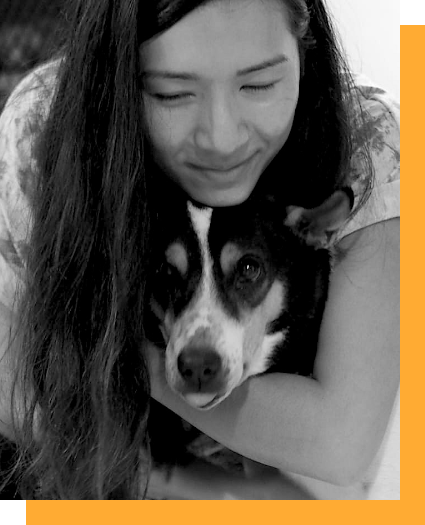
Vincent’s sophomore collection, womb song (2024), was written following the death of her beloved dog, Ealga. This collection develops themes that were nascent in Vincent’s earlier poetry, exploring dreams and the kinship between human and more-than-human within new spheres of grief and motherhood. womb song differs markedly from Red Earth at some points, such as Vincent’s experimentations with verse. At others, she treads familiar ground and subject matter with deeper consideration, evidenced in poems with a focus on the spiritual, such as “Temple vignettes” and “Sit / Breathe”, which are inspired by the poet’s practice of vipassana meditation.
Such poems feature alongside an array of diverse, multi-species subject matter, from egg-laying turtles to the complexities of grief and its letting-go. These make up the first section of womb song, titled “Is the heart just a lotus waiting to bloom?” Guided by the poet’s meditative practice, these poems converge upon the poet’s reflections on her life and the lives of fellow beings. While Red Earth centred on the relationships between creatures inhabiting earth and the shared sense of belonging to this home, womb song looks more closely at the kinship between different species and how specific experiences like grief and motherhood bridge their differences.
In poems such as “Fern song”, “Kinabatangan” and “Womb song”, the speaker finds companionship in ferns and elephants, whose life experience teaches her how to cope with her loss. Rather than a relationship of unequal powers where the human is in the superior position, the speaker relates to the ferns and elephants, the subjects of these poems, as equals, referring to them in a tone of respect. In these poems, human dependency on the natural world is explored through the speaker’s reliance on the wisdom of ferns and elephants.
The speaker establishes a connection to the ferns and elephants by first identifying with them. In “Fern song”, she identifies the ferns as her “sisters” and remarks on how alike they are in “holding what was dearest close to our hearts”. In “Kinabatangan” and “Womb song”, the speaker recognises and acknowledges the elephants she meets as fellow mothers. By relating to them with familial terms, the difference in species is bridged and both parties appear less foreign from one another. It allows both sides to regard one another as mutual kin.
With this connection in place, the speaker reflects on the life experiences of the ferns and elephants, seeking to learn from them. In “Fern song”, the speaker asks a particular fern a series of questions such as, “How do you make peace with wherever home is for you and grow through the grief and sorrow that waterlog your roots?” The speaker treats the fern with equality, fully recognising it as the subject of its own life, and growing through challenges and uncertainty, just like the speaker. The attachment of emotions to the natural processes of the fern enables the speaker to connect with the fern, and acknowledge that despite their difference in species, they do share common experiences. Reflection then becomes beseeching, as the speaker asks: “Teach me, fern, to shed my brown leaves and grow again with little resistance.” The conversation with the fern bridges the different perspectives of plant and human, helping the speaker to process personal challenges by drawing on the experience of nature.
In “Kinabatangan”, the speaker briefly connects with a female elephant whom she passes on a boat tour. The elephant initially faces away, so the speaker wills the elephant to turn and look at her. When the elephant does, the speaker remarks that the elephant “holds my gaze” and she imagines approaching the elephant and “placing my palm on her forehead”. Importantly, this moment is not simply a touristic venture, one where the tourist looks and the elephant is looked at. The gaze held betwixt speaker and elephant is mutual and cognisant of their roles as mothers. Although lasting only a moment, it leads the speaker to conclude that their ‘connection is short but deep’. The speaker’s connection with another female elephant in “Womb song” goes deeper than a glance as she learns the life history of the elephant she walks alongside through the narration of the elephant’s mahout. Once pregnant with two calves, the elephant lost one of them to stillbirth, while the other was shot by a fearful farmer. The speaker describes her womb grieving this loss and acknowledging it as her own. The womb becomes a symbol of solidarity and unity, as the pain of a bereft womb is not the elephant’s to bear alone, but also the speaker’s, who connects with the elephant as a fellow mother. On behalf of the elephant, the speaker asks that her “womb will one day sing again with the song of another elephant calf” and that when this elephant calf is weaned, the calf would be able to “sing her own womb song to the world”. The wombs that connect mothers, likewise connect them with their daughters, and this experience of motherhood becomes an extended chain, connecting mothers across species and generations. Through the symbol of the womb, the speaker acknowledges the shared experience of motherhood and acknowledges the equality of all life brought into being by their mothers.
The second section of womb song, “We turn into spoons holding each other’s hearts”, feature poems inspired by dream sequences and written in verse, detailing various journeys in the speaker’s unconscious world. The title of this section comes from a line in the poem, “Dream Sequence (XXI): Ealga”. It is a meditation on the speaker’s connection with her dog, using juxtapositions of stillness and activity to convey how this connection endures across their lives together, outlasting the ultimate stillness of death.
The poem begins with a description of “Egyptian ruins” juxtaposed with the speaker’s dog “waiting for our walk” with an alert posture. The ruins conjure a place and time belonging to the past, which is fixed in time and unchangeable, connoting immobility. This is contrasted with the speaker’s dog in a posture of expectant waiting, creating a sense of anticipation.
However, this expectation of movement is thwarted when the speaker does not immediately go on the walk with her dog. Instead, the dog is described chewing a medicine packet while the speaker’s mother remarks that the dog has “grown old and tired” and “it’s best to let [it] sleep”. Rest and immobility is contrasted with walking and motion, and action is stilled before it can occur. The next line creates a sense of momentum as it describes the speaker and her dog running “Along the corridors, off leash”. “off leash” suggests a sense of freedom, but this is dampened by the “stomping of impossible feet three storeys above” which has a foreboding connotation, seeming to imply that the speaker and her dog are being chased.
At the end of the poem, the speaker embraces her dog—an image of stillness. However, their subsequent transformation into ‘spoons holding each other’s hearts’ implies a perpetual state of activity as they continue to hold onto each other, entering an infinite space where time is of no consequence. Not even death, the ultimate stillness is able to break their bond. Through scenes juxtaposing movement and the lack of it, “Dream Sequence (XXI): Ealga”, seems to imply that connections with those we love can endure in spite of death.
The connection between the speaker and her dog in “Dream Sequence (XXI): Ealga” is a shared theme of the other poems in womb song, whichdevelop the relationships between a woman and her fern sisters, and fellow mothers, human and elephant alike. This theme also informs Red Earth, which explores the common bonds tying humans, more-than-humans and the environment to one another as well as their shared home, earth. Through the exploration of these varied relationships, the poet embraces multiple viewpoints, valuing the experiences of fellow creatures and the environment whilst acknowledging the sacredness of all life.
Works cited
Esther Vincent Xueming. Red Earth. Tacoma: Blue Cactus Press, 2021.
—. womb song. Singapore: Ethos Books, 2024.
“Ecofeminism.” Harvard College Women’s Center. n.d. Web. 5 May 2025.
