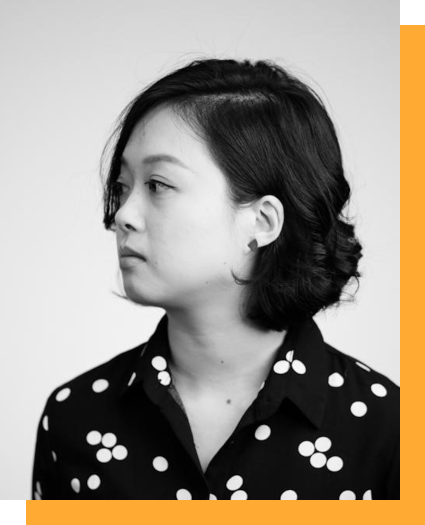
Euginia Tan (b. 1991)
CRITICAL INTRODUCTION
Written by Nicole Bruma
Dated 24 Mar 2026
As a multidisciplinary artist, Euginia Tan’s work reflects, just as for her, a preponderance for wandering, having searched for homes across artistic disciplines. As a poet and playwright, Tan’s approach to each genre reveals a profound understanding of the human condition and a penchant for unmasking it, especially through the lens of the absurd. With this knowledge of interpersonal relationships being a consistent characteristic of her literary career, I wish to analyse her poetic body of work to examine this progression across her personal journey and by extension, her growth as a poet.
Like most artists, much of Tan’s work is based on her own experiences. Since the inception of her self-published debut Songs About Girls (2012), she has featured different perspectives that all share an overarching sense of barely suppressed yearning. Assembled through the narrowing down of an already existing collection of personal poems, many of her speakers seek understanding, mutual tenderness, and to be seen wholly as they are. They crave to be fiercely held despite themselves, more so than to find any practical solution to their worries.
In Songs, Tan’s speaker declares how one can emerge victorious by choosing to be vulnerable toward others, which is most evident in the poem “Disarmer”. Dedicated to Tan’s friend, the speaker shares how she and a friend have been mutually changed as a result of their relationship, a transformation compelling enough to halt a stray gunman:
He will stare at the beauty we have painstakingly wrought
And he will be disarmed.
Just as I was.
We can stop wars. We can open doors.
The poem “Dreams For Sale, Dreams For Sale” displays similar themes to “Disarmer”, though in this instance it is for a romantic, rather than platonic, love. The speaker takes a crush and their qualms into their own hands, declaring “You. I want to help you solidify this quivering mass. / Honeyed words should do the trick.” Both poems feature promises made in naivete but with the conviction of young speakers doing so out of love, such as how “a man with a loaded gun / Will put down his weapon” (“Disarmer”), and by promising to remove all barriers holding oneself down: “Dreams are volatile. [ . . . ] I will set them free [ . . . ] to impose / Their shapes and sounds in reality” (“Dreams”).
It is worth highlighting the arrangement of these poems in Songs; their thematic similarities bring one to interpret both poems as being connected, and from this perspective “Disarmer” reveals how the vulnerability towards another provides shared comfort to their subjects: the space between them is filled by a mutual admiration that strengthens their relationship, even as the speaker shares their surprise at how easily they find themselves stripped down in the other’s presence (“You have a gift of disarming me.”). In contrast, “Dreams” contains similar elements of longing and tenderness between a pair that are unaware of the other’s desire to connect—there's a desperate need to please, a self-appointed sense of responsibility on the speaker’s end as they declare to claw away at any obstacles in hopes the subject of admiration eventually thinks of them romantically; “ / then I notice I'm already in the[ir orbit]”.
While vulnerability is a core element of Songs, more often than not, these speakers find themselves holding their tongues to remain agreeable. They yearn deeply for change yet remain compliant in the eyes of their intended receiver. By articulating the simmering emotions that can arise from self-restraint, Tan guides the reader into her speakers’ varying states of disarray in order to analyse their complexities. Tan’s vulnerable debut captures an inherently feminine coming-of-age experience, one that is volatile and passionate, yet repressed and constrained. Her poems rage against the strict confines of what a girl is expected to be, and chided for when deemed otherwise—docile, serene, always graceful and grateful.
The scenarios in which Tan’s speakers in Songs find themselves are familiar to many, even decades after publication. Pulling from her past experience as a young advocate for mental health with Singapore’s Health Promotion Board, Tan’s presentation of worn, aching speakers came at a time when people with depression diagnoses, such as herself, were scrutinised heavily in Singapore. The way Tan’s poems proceed with this empathy for those facing mental health difficulties, combined with her quiet probing of human experiences, provide a base from which Tan’s evolution as a writer can be observed through her literary career.
If Songs’ focus was more personal, Playing Pretty (2013) could be considered, in comparison, as unfolding within the confines of a body that has begun to look forward, up and around itself, spying on others and finding how their perverse inclinations mirror its own. A continuation from her debut, Tan describes the criticism for Songs’ morosity and crudeness to “[have] spearheaded this collection” in Playing’s foreword, taking it further by engaging more intentionally with mature themes and allowing her speakers’ desires to increase in their potency. In one of the poems in Playing, for example, a temple goer is seen toying with the implications that arise from having sexual relations with a temple keeper:
If I let myself live here with you, alone,
In the mouth of this shrine where we
Would be mortal guardians, biding our time. . . . . . . . . . . . . . . . . . . . . . . .
We could keep loving each other like this,
The veil of smoke curling from the tips of joss sticks
Always soaring above
And in the midst of all this
Somewhere
We could secretly consummate.If I let myself stay here with you
Perhaps a dove with a pomegranate branch in his beak
Would fly down and give us the blessings we need…
But I have to leave.
When all is said and done I will remember
Turning on my heel
(“Forbidden”)
Using free verse, Tan allows the speaker’s stream of consciousness to flow as they imagine what life could be like if they acted as they wished. Accusing the temple guardian of attempting to elicit a passionate encounter, the temple goer initially refuses the idea, taking the moral high ground and how “the sanctity of this [temple is] too compelling” to enact such behaviour. Eventually the speaker is honest with themselves about the freedom that might come from reveling in carnal desire, as well as the eventual demise of this relationship. The poem tugs itself back and forth between lustful predilection and the reality that they will choose to remain pious in appearance.
Whereas the speaker in “Forbidden” decides to remain physically resolute in the face of temptation, “Letting Words” features the unleashing of a suppressed rage attempting to disguise itself as a game of word association. Prefacing themselves as not to be taken seriously at first, the female speaker quickly descends into exasperated cynicism over an overt power imbalance and feeling discarded in a familial, romantic relationship:
Wallaby walrus Walt distance makes the heart shrivel
Drivel mindless trivial gravitate toward the gravel. . . . . . . . . . . . . . . . . . . . . . . . . . . . . . . . .
Your new harp like a mute
House of lord on your own accord how absurd
To be heard and not floored. Malady milady remedy
Telling me diddy diddy dum diddy dee.
Doo wop mop the top off your fallacy celibacy render-
ing meLetting words roll off the tongue just for fun.
With a general lack of punctuation, aside from a few full stops for emphasis, Tan’s choice of words invokes feelings of unadulterated loathing as the speaker tears into their spouse, their long-soured relationship worsening as the spouse brings a new partner into their home. The use of rhyme and wordplay is loaded in each line—the speaker accusing the self-imposed, head-of-the-house spouse (“House of lord on your own accord how absurd”) of using this new partner for physical company rather than confiding in the speaker (“Malady milady remedy”), and the spouse defending their decision in which the speaker recounts as the scatting often associated with doo-wop (“Telling me diddy diddy dum diddy dee”), essentially interpreting it as nonsense verse. The speaker then turns it back on the spouse by throwing another string of insults to criticise the faulty reasoning (“Doo wop mop the top off your fallacy”), yet admitting they are starved of affection and permitting such behaviour—partly because the speaker recognises she wouldn’t be taken seriously, and possibly hoping that the spouse doesn’t rid himself of her entirely, her harsh words requesting to be taken in jest: “celibacy render- / ing me / Letting words roll off the tongue just for fun”.
Despite the conversational style in “Forbidden” and “Letting Words”, Tan suggests in Playing‘s foreword that they were not written to be performed, describing herself as having mastered the suppression of her true feelings. Whether it is a seemingly pious temple goer who projects their own desires onto the temple keeper, or a family member masking their disgust over shameless infidelity by playing into stereotypical gender roles, these situations are united by how the speakers often find themselves withdrawn into their interiorities, inner worlds teeming with emotion while their bodies are unmoving vessels. They reflect a deliberate inclination to moral passivity and an inability to act as they wish respectively, compliant and unresisting in the circumstances they find themselves in—a similarity they share with the speakers in Songs.
Tan’s third collection Phedra (2016) represents a shift in these concerns, despite her continuing interest in and inspiration from experiences of suppressed expression. Developed after a period of mentorship with the poet Grace Chia, Tan has commented that the collectionis not associated with the eponymous Greek mythological figure. Rather, she explains:
[Phedra] was also never fully reliant on the angle of Greek mythology, but rather just how the ordinary coincided with a lot of myth and folklore that we usually think of as lofty notions but are closer to us than we think. [ . . . T]he title was heavily inspired by a young girl I had taught art to, whose name was Phedra. Later it helped that in my casual reading, I found the figure of Phaedra who was a silent, overlooked persona that I could relate with.
(Tan, EthosBooks.com)
Tan also took mild influence from Sarah Kane’s play Phaedra’s Love (1996), focusing on a contemporary dysfunctional family that escalates when Phaedra commits suicide out of shame. She does so when her affections for her self-indulgent stepson Hippolytus are not reciprocated, and once he confesses that both he and her absent husband Theseus have had an affair with her daughter Strophe. The plot then concludes with the destruction of their royal family as a result of an oppressive, almost omnipotent wielding of male material power, expressed through violence toward the play’s female characters.
In contrast, or arguably in response to the tragic ending of Phaedra’s Love, many of the collection’s poems show the transformation of subdued, passive subjects made resilient over time rather than succumbing to such darkness. While previous collections featured speakers who were impassioned, silenced, and lonely, Phedra contains the same intensity but with a new air of enlightened detachment, with its speakers beginning to confront moral tribulations and difficulty, as well as starved affections. This third collection could then be interpreted as the halting steps towards self-reformation, the poems as jumbled fragments of time arranged in a non-linear manner, similar to one’s path of progress towards being comfortable in their own skin.
For instance, in the poem “Am I Prey” the speaker begins with a list of unanswered wishes, each wish contained within a structured row of three:
i wish to be the thrower of the pebble
that skims the water, and not the
disposable stoneto be the hand that ruthlessly flings
the fragile vase, and not the
shattered vessel.. . . . . . . . . . . . . . . . . . . . . . . . .
i wish i were a whole song
but i am but a note, i wish i were the rain
but i am but a drop.
Often the battered, bruised receiver, the speaker of this simpler poem initially laments being the one that lacks control in their personal life, feeling insignificant and ending up alone each time. There are parallel structures in each line as the speaker uses aspirational metaphors as conduits for individual desire. Yet with this structure there is routine—the poem moves on with the speaker picking themselves up in the same line of thought, implying that this is a situation they have found themselves in before, and reinforcing their passive nature as they “accept that there are mountains [they] cannot scale / in jungles [they are] but a leaf / not even a tree”.
The poem concludes that there is some power to be had in passivity, notwithstanding their still sullen language; dissociation from a hard life can also be an indication of a life longer than initially expected, and as the speaker considers the deaths of past selves after every inopportune encounter, they provide a reminder that this must count as living, too: “when there are miracles i am but growing old / when massive deaths occur, i am but / sleeping”
Out of all the works featured in Phedra, I find that “Escaping Needle Holes” demonstrates this theme of self-reformation the most aptly, the poem first presenting us with a fictionalised family history:
someone’s father
almost died in a plane crash
back in 1983. . . . . . . . . . . . . . . . . . . . . . . . . . .
someone’s car once smashed
to smithereens while someone saved her
before she too was battered in. three
masked intruders she had never seen.
These quotes parallel Hippolytus’, Phaedra’s stepson in both mythology and in the play, apathetic character in Phaedra’s Love. As the play begins with him and the hints of his animalistic vices strewn about the bedroom, pleasuring himself as he watches the destruction and chaos of the outside world on a television, the audience finds him immune to the unforgiving reality he had detached from. The above quotes from “Escaping Needle Holes” begin with a similar indifference, sharing the information as if the speaker were far removed from such tragedies, but in between the macabre rumours the reader is granted a salve, told that these are anecdotes from loved ones that “[stand] before [us] today. pert and pretty, / nose upturned. gaily twirling daisies / in her hair streaked by the sun.”. The speaker first mythologises their own family history, similar to Sarah Kane’s retelling of Phaedra’s plight, then becomes aware of the miracle of the figures who stand before her, having survived the rumours, the fictions. Seeing them continue to live freely despite near death experiences, the speaker wishes by the end of the poem that they, too, can do the same and reach a state of equanimity, rather than apathy, toward her own challenges that lay ahead:
there are so many narrow hits
as these i cannot document enough of.
near misses, someone getting just close enough
the edge of the crater, but not close enough
to die. myself included.. . . . . . . . . . . . . . . . . . . . . . . . . . .
you see, there is too much to live for.
there is too much to write. and we outlast our
pasts much stronger than we think we can.
it brims our hearts with more of this
charmed nonchalance.
less of fun.(“Escaping Needle Holes”)
Phedra went on to be shortlisted for the Singapore Literature Prize in 2018, despite the mixed public reception at the time. Commenting briefly on the judgements received when self-publishing Songs and Playing, “the nomination would be a symbol of accomplishment [while] also representing acceptance” (Ng Pui Shuet Marianne Charmane, BookCouncil.SG). Tan also shares in the same article that while the nominated work was published with Ethos Books, she “hopes that the literary community will become more welcoming of self-published authors and believes the SLP shortlist is a step in the right direction.”
These sentiments of acceptance—by the self, the theme of the collection as well as its nomination—are reflected in another of Tan’s poems a few years after Phedra’s publication, titled “Clams”:
1.
considerate clams flavour themselves
before being eaten
siphoning salt off land. . . . . . . . . . . . . . . . . . . . . . . . . . .
whole muscles devoted to
a sole piquancy like
the first bite of peach2.
thoughtful clams leave valves behind
after they are eaten
for poxy crabs to burrow in and out
like commas between poems and
old newspaper articles my grandfather
used to write with ink as black as clam glands
“Clams” was Tan’s contribution to an exhibition titled The Fabric of Sympathy (2020), for which she was selected alongside other artists who shared “a keen devotion to materiality in their art practice” and whose work was chosen to bring about “a call to treat things with care and sympathy” (Heritage.SG). “Clams” anthropomorphises the mollusc and speaks of self-sacrifice. The analogy of the clam offers space for rumination on how to be considerate and thoughtful as a member of any ecosystem, as well as regarding their protective nature as a metaphor for filial piety. The poem reaches an imperturbable conclusion that is reminiscent of the beginnings of self-assurance in Phedra, now realised as a truth of life instead of a possibility:
3.
still clams calm themselves
as resting warriors do before a fight. . . . . . . . . . . . . . . . . . . . . . . . . . . . . . . .
they do not ask to be removed
from one another
but do not pine when separation reaches
for a clam recognizes the start and end
like a bottle waiting to be filled then poured
where time is but a bung
“Clams” eventually served as the inspiration for two dance films exhibited as part of RawGround 2026 named VALVES and VESSELS respectively, a “cinematic exploration of the delicate balance between appearance and authenticity in modern life [ . . . ], delv[ing] into the personas we uphold, the memories we carry, and the selves we shield.” (Programme blurb, RawGround.SG). In comparison to Songs, with poems that often revolve around the thoughts of singular, passive speakers, the observations made in “Clams” about being present and devoting oneself to community is a significant shift from Tan’s initial worldview, a meditative wistfulness having influenced her practice.
The growing strength of voice and assertiveness in Tan’s poetry is partly the result of her deepening involvement in Singapore’s theatre scene. Having debuted as a playwright right before Phedra’s release in 2016, under the mentorship of Joel Tan with Holidays, Tan has collaborated closely with directors and actors throughout the play development stages—those done by others as well as her own. Her plays tend to focus on themes such as dysfunctional families, the borderline absurd, and are often bleakly humourous, similar to her existing work as a poet. Tan’s poetry itself has continued to develop and change in tandem, though her artistic message remains to extend comfort to the lonely, the isolated, and the withdrawn, providing the assurance that time is an ally rather than an adversary.
In an artist talk presented during the opening of a presentation with collective DASSAD at Objectifs, Tan described the process of playing with the physical conceptualisation of time and the emotions tied to such varying periods, a subject prevalent in her practice as both poet and theatre-maker. Incorporating past poetry in her exhibit titled “Commentary Obscura” (2023) and recontextualising it as a controlled element, she considered “how words and light also have to hold that quality of being both passing and permanent” (Bad Clocks: Alley Through a Pinhole); to express this, she had her poetry printed onto translucent acrylic sheets. Exhibition audiences were then invited to hold them up toward a camera obscura—made by producing a hole in the wall of a dark room and allowing natural light to flow through it, resulting in an inverted projection of the view outside onto the opposing wall within. Only then would they be able to read the contents of the acrylic boards.
Tan hoped that the beholder would find themselves awash in the scenic outdoors, allowing her opaque words on transparent acrylic boards to meld with the obscura and pass through them—the silhouette of her desires strongest in the daylight, a reminder that what was then earth-shattering and impossible to achieve has already passed, will pass as the sun sets at the end of yet another day. Tan’s contribution to the Bad Clocks’ exhibit granted an opportunity to familiarise audience with an inner darkness, to see through and beyond it. I believe “Commentary Obscura” serves a fitting analogy for the movement of Tan’s poetic journey—birthed as a voice for the turbulent, withdrawn nature of insecure youth and transformed into a quiet composure in the face of life’s tribulations. It is a familiarity with, rather than a fear of, the darkness, a recognition of its assurance. In her speakers’ desires we can discover our own as we are moved to reflect on our role in the communities, we find ourselves in and how we might contribute to them. Yet, as Tan’s poems suggest, before we can strengthen our kinship with others, we must first allow ourselves to be vulnerable.
Works cited
Ng, Marianne-Charmane. “Giving Voice Through Her Words”. Singapore Book Council. 5 December 2018. Web. Accessed 20 Mar 2026.
Tan, Euginia. “Clams”. Singapore: Self-published, 2020.
—. Phedra. Singapore: Ethos Books, 2016.
—. Playing Pretty. Singapore: Self-published, 2013
—. Songs About Girls. Singapore: Self-published, 2012.
—. Transcript. Bad Clocks: Alley Through a Pinhole. Eds. DASSAD collective (Dave, Adar, Soak). Singapore: Objectifs, 28 January 2023.
Unknown. “Euginia Tan on writing about the female body and identity — Singapore Lit Prize feature.” Ethos Books. July 2018. Web. 20 Mar 2026.
—. “The Fabric of Sympathy”. Heritage SG. 2020. Web. Accessed 12 March 2026.
—. “(Un)finished Work: In pursuit of the work of pretending”. Raw Moves. January 2026. Web. Accessed 20 Mar 2026.
